Legacy Resources
Overview
These materials represent foundational CEWD resources and past initiatives that continue to inform and support workforce development efforts across the energy industry. While some content may reflect earlier phases of CEWD’s work, these resources remain available as reference tools to provide context, research, and insights for stakeholders.
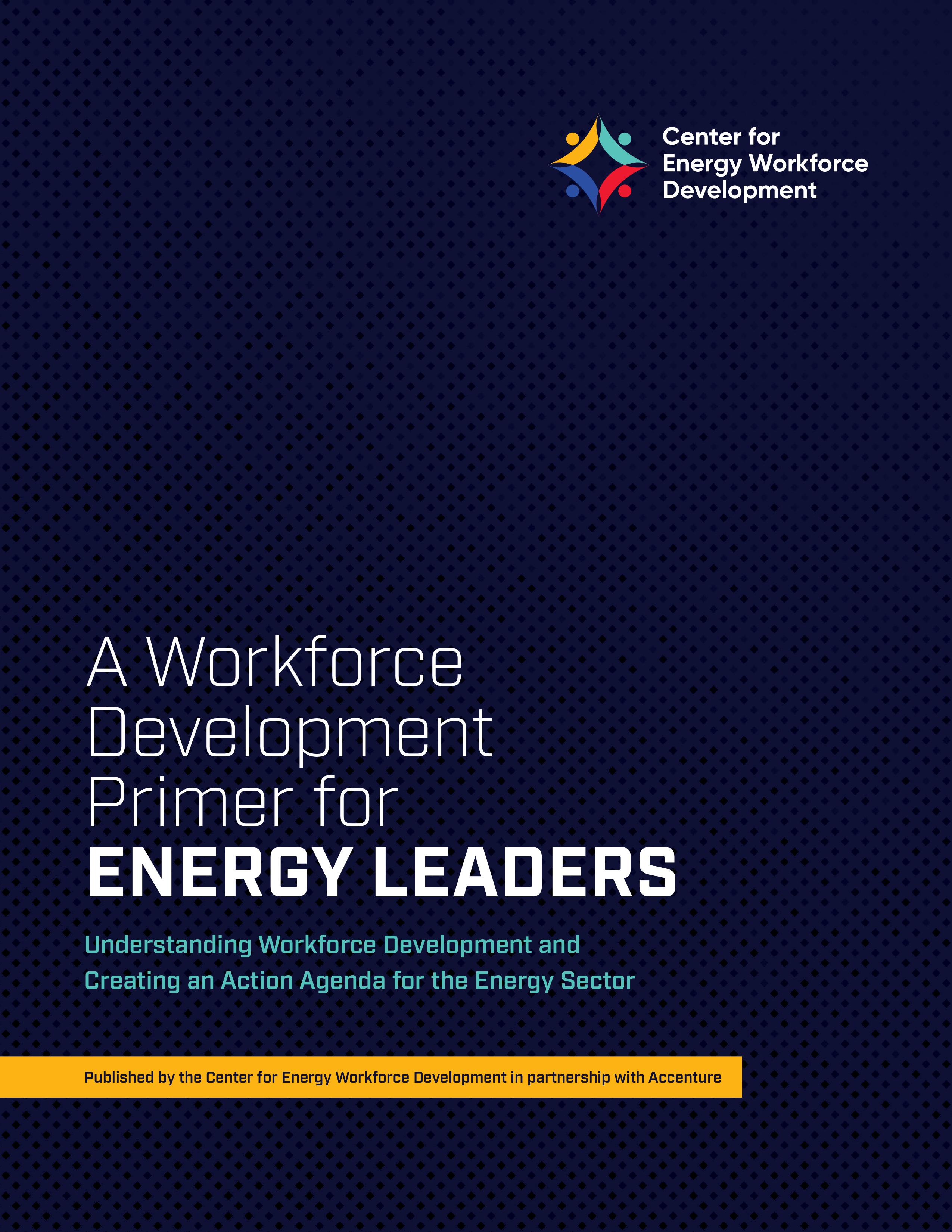
Energy Workforce Development Primer
Discussions on workforce development have increasingly found their way into many c-suite conversations and corporate boardrooms. Despite the focus on workforce development, many energy business leaders are working to better understand the concept and what it encompasses and how to create the structure to make long-term people planning a strategic business imperative.
CEWD’s new publication, a Workforce Development Primer for Energy Leaders: Understanding Workforce Development and Creating an Action Agenda for the Energy Sector, created in partnership with Accenture, provides a strategic overview of workforce development and suggests industry responses to the workforce development challenges before us.
Download a Copy Below
Energy Workforce Report
Education, networking, training, and idea-sharing are essential for professionals navigating the complexities of their corporate responsibilities. This especially holds true for those charged with workforce development leadership, as they are operating in both the “here and now” and planning for the unknowns of the future.
CEWD is proud to provide resources to support practitioners charged with workforce development stewardship and executives looking for data, insights, and lessons to be learned. We also serve as a resource to those outside the industry whose work impacts the practices, policies, and people essential to the energy workforce.
Many of these resources are available here and throughout this site. Others are reserved for CEWD members and can be found here, in our Members Only portal.
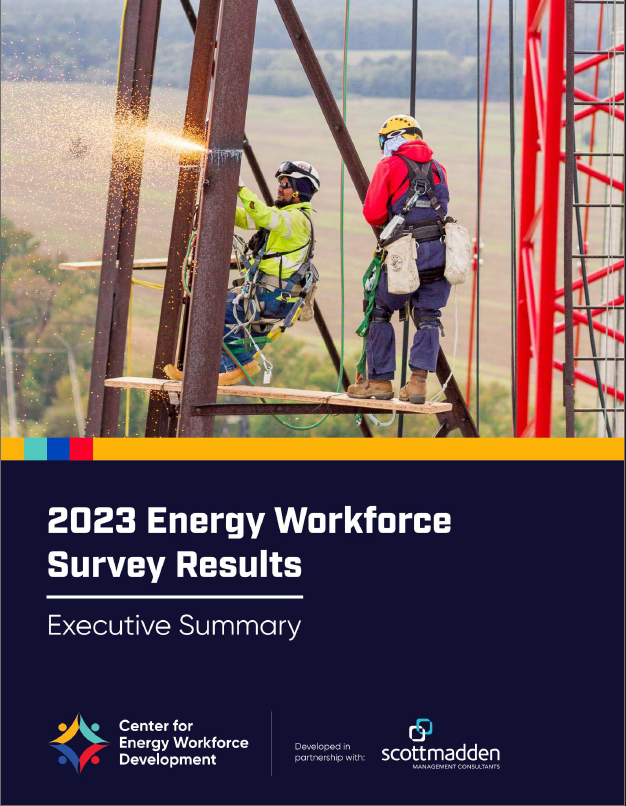
The Center for Energy Workforce Development has been looking at the demographics of the workforce since 2006 and has conducted what has been called the Gaps in the Energy Workforce Pipeline Report for 15 years. The bi-annual study, newly named the Energy Workforce Report, explores the size of the utility workforce, demographic composition, forecasted retirements, and attrition data to support industry companies with their strategic workforce planning.
CEWD members receive regional reports that explore future hiring demand within geographic regions across the country. Companies that participate in the data collection receive customized company scorecards that allow them to benchmark against industry peers. CEWD is grateful to NEI, NRECA, APPA, and APGA for their collaboration on this project.
CEWD has discontinued the Energy Workforce Report. 2023 is the last year for which the report data is available. We encourage those interested in workforce data to see the Department of Energy’s U.S. Energy and Employment Report
Access Prior Reports

Workforce Development Maturity Model
Workforce development has risen in prominence over the past few years as employers face an increasingly tight labor market. Amid a growing gig economy, and robust job market, there may not be enough people to fill all open jobs in the country. Even if every unemployed person were to fill a job tomorrow, there would still be millions of unfilled jobs.
For energy employers, the challenge in securing talent is exacerbated by unprecedented hiring demands within the sector: employers will need 17 million replacement workers and 15 million new workers over the next decade.
These hiring demands reflect growth in power demand, a trend which is expected to accelerate. Moreover, the utility industry often competes for talent with the technology industry, which has the fastest growth in green skill demand. The utility industry also competes with all other infrastructure-building industries for construction workers. As power demand grows, these workforce trends will likely intensify. 2024 marked the end of a two-decade era of flat demand amid a data center and manufacturing infrastructure boom. U.S. electricity consumption rose by 2% – a growth rate that is expected to hold in 2025 and in 2026 and primarily be met with increased generation from renewables.
Because of the importance – and many would say, urgency – of prioritizing workforce development, Deloitte and CEWD teamed up to create this resource perspective that offers the first of its kind Workforce Development Maturity Model.